As the Sandhills Sentinel reported, the Village of Whispering Pines said in a news release this spring, "The existing dam, built in sections between 1900 and 1964, is showing signs of age, including seepage, cracking, and concrete deterioration." Read that sentence fast and it sounds like a warning. Read the label attached to it, "High Hazard," and it sounds worse. If you walk the loop around Thagard Lake most mornings, or keep a boat in one of the storage racks off Lakeshore Drive, that phrase has probably crossed your feed or come up at a neighbor's mailbox at some point this year.
Here's the part that doesn't travel as far as the label does: in dam safety terminology, "High Hazard" is not a statement about how close the dam is to failing. It describes what would happen downstream if it ever did. North Carolina's Dam Safety Program classifies dams by consequence, not condition, and a dam earns a High Hazard rating because of what sits below it, homes, roads, people, not because engineers believe collapse is coming next week. Thagard Dam has that classification because it's the largest dam the Village owns, holding back more than 103 million gallons of water above a residential area. The classification is about scale, not urgency.
That distinction matters if you're trying to figure out what's actually happening to the lake you walk past every day.
A Dam Built in Four Pieces
Thagard Dam wasn't built once. It went up in four separate segments between 1900 and 1964, which means parts of it are pushing 125 years old and the newest section is still more than 60. Over the past several years, the Village's engineers have logged a specific list of problems: seepage where the dam meets the underlying rock, cracking and leakage in both the primary and secondary spillways, and concern about internal concrete deterioration from a chemical process called Alkali-Silica Reaction, essentially a slow breakdown from the inside out.
None of that reads as an emergency. It reads as what happens to century-old concrete infrastructure eventually, and it's exactly the kind of finding that leads an engineer to recommend replacement over repair. The Village's own consultants concluded that continuing to patch, investigate, and rehabilitate a dam that no longer meets current design standards costs more in the long run than building a new one. That's the actual decision behind the headline: not "our dam is failing" but "our dam is old enough that fixing it forever is a worse bet than replacing it once."
The Money Was Already Moving Before the Announcement
The financial groundwork for this project didn't start with a press release. The Village has maintained a Capital Reserve Major Repair Fund for years specifically to cover large capital projects like this one, funded by a dedicated slice of the property tax rate, ten cents per hundred dollars of assessed value, that gets automatically routed into the fund every year. As of mid-2025, that reserve held more than $3.2 million, with over a million more expected to flow in during the following fiscal year.
The Village also applied for federal help through FEMA's High-Hazard Potential Dam grant program, which can cover up to 65 percent of an eligible project's cost, leaving the Village responsible for the remaining 35 percent. Council approved a $415,000 capital project budget to fund the early engineering and design phase, whether or not the federal grant comes through. That's a Village choosing to move forward regardless of outside funding, not one waiting on a check to decide whether the problem is real.
By September 2025, the project had already moved past paperwork. A barge went out onto Thagard Lake to begin waterside drilling, part of the geotechnical work needed before any design is finalized. That's the most visible thing that's happened so far, and it happened more than a year ago, quietly, without draining a single acre of water or closing a boat ramp.
What Changes, What Doesn't
Reading through the Village's updates, the project splits cleanly into two timelines that are easy to confuse if you only catch the headline.
Already happening:
- Geotechnical drilling from a barge on the lake, which started in September 2025
- Engineering and design work funded by the Village's approved $415,000 budget
- Ongoing coordination with the Village's engineering consultant on the eventual construction plan
Not happening yet:
- Any draining of the lake
- Any construction on the dam itself
- A confirmed start date, beyond the Village's current estimate of "as early as 2028"
The most recent public update, from June 2026, lays out what the finished project is expected to look like: a new labyrinth-style spillway, an angled, folded design that lets a dam pass more water in a flood without needing to be taller, replacing the aging straight spillway currently in place. The total project cost is now estimated at more than $20 million, a jump from the $8 to $12 million figure floated when the FEMA application was still pending. Construction, whenever it starts, will require temporarily draining the lake, since you can't rebuild a dam with water sitting against it.
That's the honest headline: Thagard Lake is going to be drained at some point, probably not before 2028, for a project that will cost the Village and its taxpayers well over $20 million. It is also a headline that's been building for years in council meeting minutes and monthly manager's reports, not one that arrived out of nowhere this spring.
Why This Is the Lake It Happened To
Thagard is one of eight lakes inside the Village limits, alongside Blue, Cardinal, Fly Rod, Pine, Shadow, Spring Valley, and Whisper. It's also the biggest by a wide margin, the Moore County Chamber puts it at 209 acres, which is a large part of why its dam carries the highest hazard classification of the group. Village materials describe the dam as one of ten lakes, ponds, and dams the Village maintains altogether, a number that includes smaller structures beyond the eight named recreational lakes. Size is the reason Thagard drew the scrutiny first. A smaller dam holding back a smaller pond simply doesn't carry the same downstream consequence, which is the entire basis of how these classifications work.
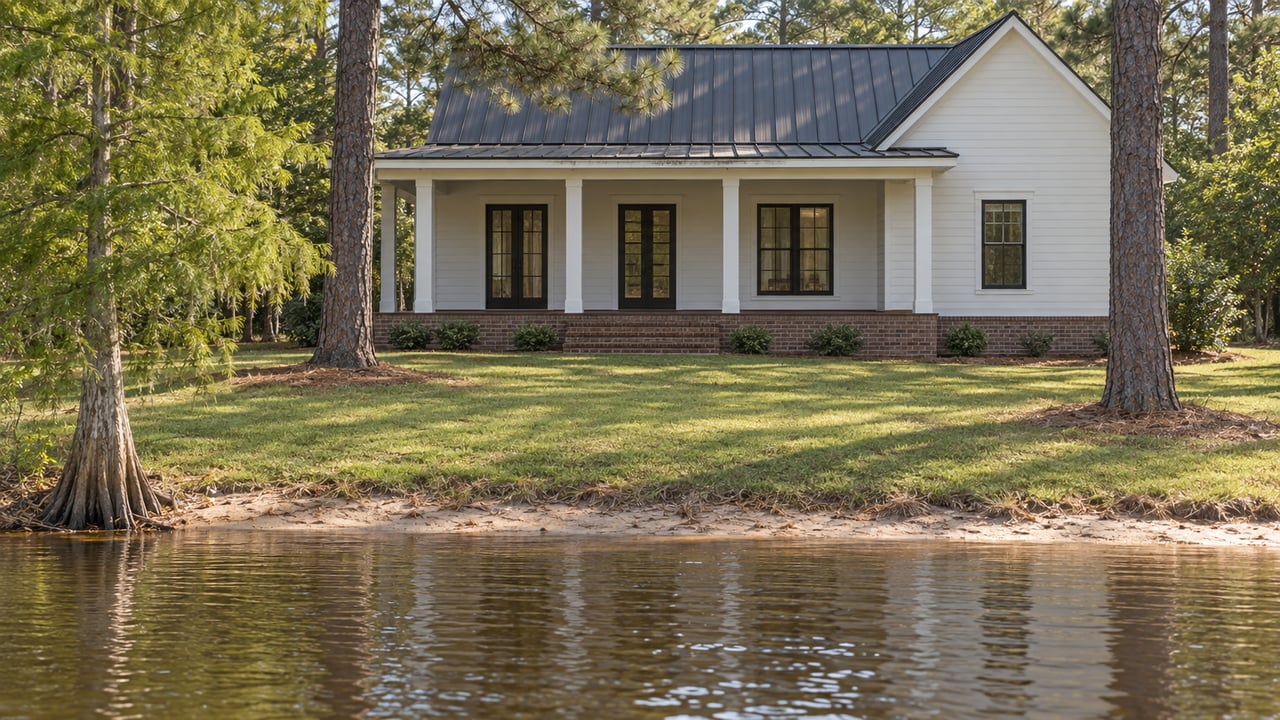
None of that changes what Thagard Lake is for right now. It's still the lake with the boat ramp at 12 South Lakeshore Drive, the swimming access at 57 Lakeview Drive, and the walking loop that runs roughly 3.2 miles around the shoreline, the longest trail inside the Village. Nothing about a design phase that's still years from breaking ground changes any of that this fall, this winter, or most likely next summer either.
The Slow Version of a Big Story
It's easy to read "High Hazard" and "$20 million" and "drained" in the same paragraph and assume something is wrong right now. What the record actually shows is a Village that identified an aging piece of infrastructure years ago, started setting aside tax revenue for it before most residents had heard the term "Thagard Dam Replacement Project," applied for federal cost-sharing, and began the unglamorous fieldwork of drilling and testing long before any public announcement made it feel urgent. That's not a crisis unfolding. That's local government doing the slow, unremarkable work of planning for a multi-million dollar project a full council term or two before it happens.
The lake will look different eventually. For now, it looks the same as it did last September, and the same as it'll likely look next September too.
If you're weighing what any of this means for a home near Thagard Lake, or you're curious how Village infrastructure projects like this one tend to play out over time in the Sandhills, Nikki Bowman and the team at Realty World Properties of the Pines know this village well enough to talk through it plainly. Contact us.